

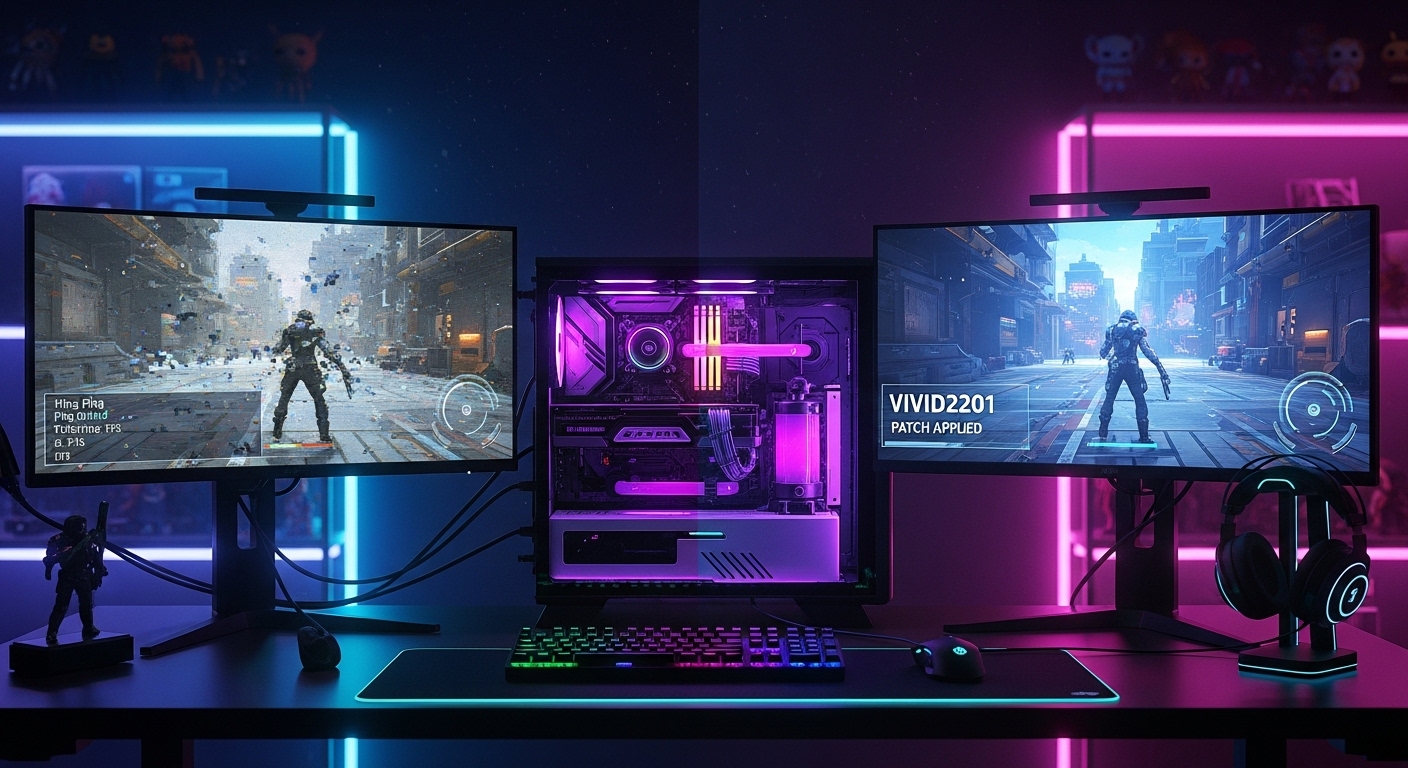
If you’re searching for Gaming Vivid2201 patches, you’re likely trying to figure out one of three things:
- What these patches actually are
- Whether they improve gameplay or fix issues
- If they’re safe and worth installing
There’s also a good chance you’ve encountered the term in forums, modding communities, or while troubleshooting a game or system.
Let’s break it down clearly.
What Are Gaming Vivid2201 Patches?
“Gaming Vivid2201 patches” doesn’t refer to an officially recognized update from major game developers. Instead, it typically appears in modding communities, unofficial patch notes, or niche gaming tools.
In most cases, the term is associated with:
- Custom performance patches for specific games or emulators
- Unofficial bug fixes created by independent developers
- Visual enhancement mods (improving textures, lighting, or UI)
- Hardware-specific tweaks, especially for GPUs or mobile gaming devices
The “Vivid2201” tag often acts like a version label or developer signature, rather than a universal standard.
What Do These Patches Actually Do?
Depending on where you found them, these patches can serve different purposes.
1. Performance Optimization
Some patches are designed to:
- Increase FPS (frames per second)
- Reduce lag or stuttering
- Optimize CPU/GPU usage
Example:
A user running a mid-range PC installs a Vivid2201 patch for an emulator and sees smoother gameplay in demanding titles like God of War or Zelda: BOTW.
2. Graphics Enhancements
Certain versions focus on visuals:
- Sharper textures
- Better lighting/shadows
- Enhanced color grading
These are common in games where players want a “remastered” look without official updates.
3. Bug Fixes and Stability
Unofficial patches often fix issues that developers haven’t addressed:
- Crashes during specific missions
- Broken animations or UI bugs
- Compatibility issues with newer hardware
4. Unlocking Features
Some patches enable:
- Hidden settings
- Higher resolution options
- Frame rate caps removal
Be cautious here—this is where stability risks increase.
Real-World Use Cases
Case 1: Emulator Gaming
Players using emulators like RPCS3 or PCSX2 often rely on community patches. A Vivid2201 patch might:
- Improve compatibility for specific games
- Fix audio desync
- Enable smoother rendering
Case 2: Low-End PC Optimization
Gamers with limited hardware use such patches to:
- Reduce texture load
- Disable unnecessary effects
- Maintain playable frame rates
Case 3: Modding Communities
In games like Skyrim, GTA V, or Cyberpunk 2077, patches labeled like “Vivid2201” could:
- Combine multiple mods into one
- Fix conflicts between mods
- Enhance immersion without heavy performance cost
Pros and Cons of Gaming Vivid2201 Patches
Pros
- Can significantly improve performance on older hardware
- Offers fixes unavailable in official updates
- Enhances visual quality without buying new hardware
- Useful for emulator and mod-heavy setups
Cons
- Often unofficial and unverified
- Risk of malware if downloaded from untrusted sources
- Can break game stability or cause crashes
- May conflict with other mods or updates
- No guaranteed support or documentation
Are Gaming Vivid2201 Patches Safe?
This is where you need to be careful.
Since these patches are usually community-created, safety depends entirely on the source.
Safer Approach:
- Download only from reputable forums (e.g., GitHub, Nexus Mods, well-known emulator communities)
- Check user reviews and comments
- Scan files with antivirus software
- Avoid patches that require disabling system security
If you found a Vivid2201 patch on a random site with no documentation, that’s a red flag.
Comparison: Official Patches vs Vivid2201 Patches
| Feature | Official Game Patches | Vivid2201 Patches |
|---|---|---|
| Source | Game developers | Independent/modding community |
| Stability | High | Varies |
| Safety | Verified | Depends on source |
| Features | Bug fixes, content updates | Performance tweaks, visual mods, custom fixes |
| Support | Ongoing | Usually none |
When Should You Use Them?
You might consider using a Vivid2201 patch if:
- Your game runs poorly on your system
- You’re using an emulator and need compatibility fixes
- You want enhanced visuals beyond official settings
- You’re comfortable troubleshooting issues if something breaks
You should avoid them if:
- You’re not familiar with modding
- You rely on stable, competitive gameplay (e.g., online multiplayer)
- The patch source looks questionable
Practical Tips Before Installing
- Back up your game files
- Use a mod manager if possible
- Install one patch at a time to isolate issues
- Keep track of changes so you can revert them
Frequently Asked Questions
1. Is Gaming Vivid2201 an official update?
No. It’s typically a label used in unofficial patches or modding communities, not an official developer release.
2. Can it improve FPS in games?
Yes, some versions are specifically designed to optimize performance, especially on low-end or older systems.
3. Will it work on all games?
No. These patches are usually game-specific or system-specific.
4. Is it safe to install?
It can be safe if downloaded from trusted sources, but there’s always some risk with unofficial files.
5. Why can’t I find much information about it?
Because it’s not a standardized or widely recognized term. It often appears in niche communities or specific patch builds.
6. Can it get me banned in online games?
Yes, potentially. Any unofficial modification can violate terms of service in multiplayer or competitive games.
Final Thoughts
Gaming Vivid2201 patches sit in that gray area between useful optimization tools and risky unofficial mods. For experienced users, they can unlock better performance and visuals. For beginners, they can quickly become a source of confusion—or problems—if used carelessly.
If you decide to try one, treat it like any experimental tweak: verify the source, test carefully, and always have a backup plan.
