

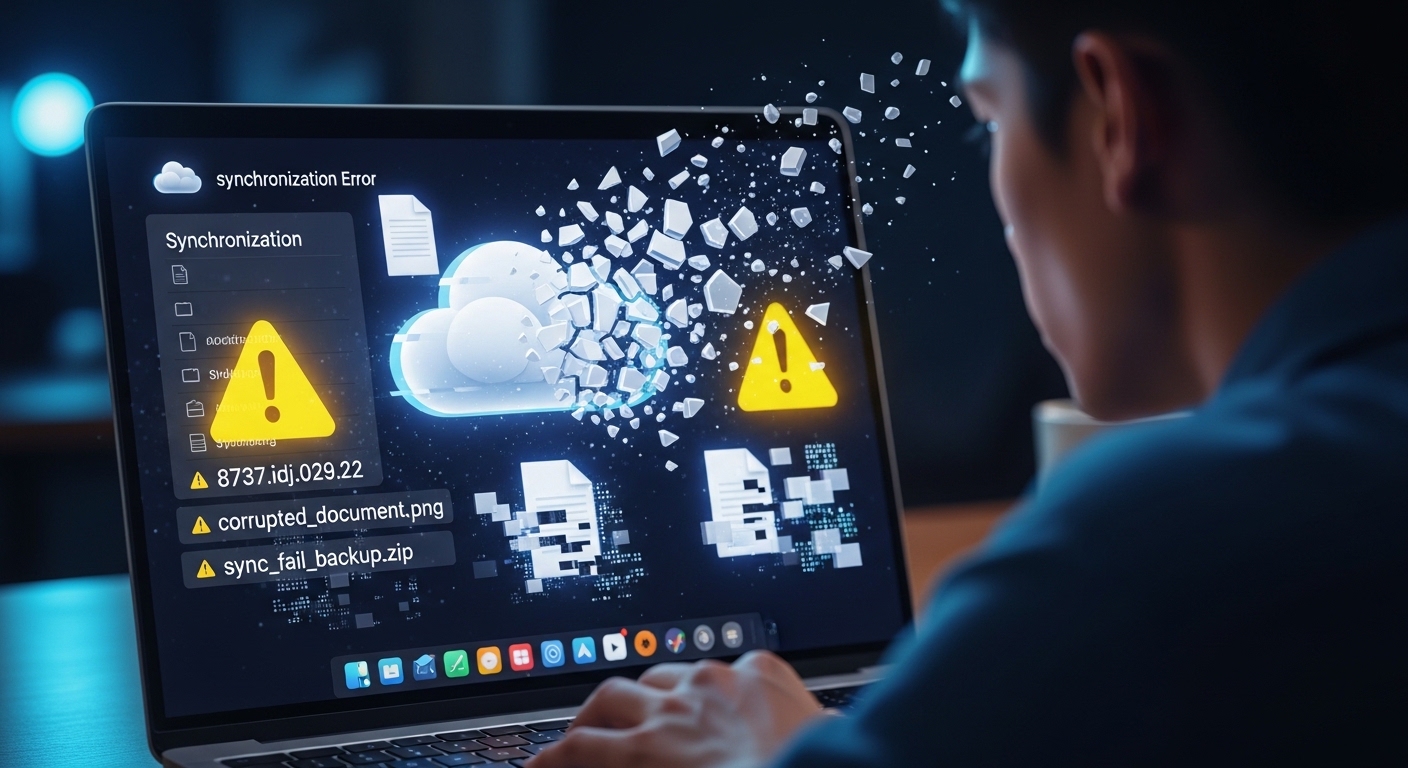
If you’ve encountered something like “8737.idj.029.22” in Dropbox, you’re not alone—but you are dealing with a non-standard issue.
This string doesn’t correspond to an official Dropbox error code. Instead, it typically appears in one of three contexts:
- Corrupted or partially synced files
- Third-party app or plugin conflicts
- Malware or suspicious file naming patterns
Let’s break down what’s actually happening—and how to fix it.
What Is “8737.idj.029.22” in Dropbox?
Dropbox itself doesn’t document this as a native error code. In practice, users report seeing similar strings when:
- Files fail to sync and are renamed automatically
- Temporary or cache files get exposed
- External apps write malformed filenames into Dropbox folders
- Encrypted or obfuscated files appear unexpectedly
In short: this is not a Dropbox feature—it’s a symptom.
Common Problems Associated with This Issue
1. Sync Conflicts or Broken File States
Symptoms:
- Files stuck in “syncing” state
- Duplicate files with strange suffixes
- Renamed files containing strings like
8737.idj.029.22
Why it happens:
- Interrupted uploads
- Multiple devices editing the same file
- Network instability
Real-world example:
A user editing a shared Excel file across two devices loses connection mid-sync. Dropbox creates a conflicted copy with a scrambled identifier.
2. Corrupted Files or Incomplete Uploads
Symptoms:
- Files won’t open
- File size shows as 0 KB or unusually large
- Strange filenames appear
Cause:
- Upload interrupted mid-transfer
- Disk write errors
- OS-level file corruption
3. Third-Party Integration Issues
Apps like:
- Backup tools
- Automation scripts
- IDEs (e.g., VS Code syncing extensions)
…can generate temporary files with internal naming schemes like idj.029.22.
Use case:
A developer syncing a project folder sees auto-generated temp files accidentally synced to Dropbox.
4. Malware or Suspicious File Activity
If the string appears suddenly and you didn’t create the file:
This could indicate:
- Script-generated files
- Ransomware staging files
- Obfuscated payloads
Red flags:
- Files reappear after deletion
- Unknown file types
- Rapid file creation in bulk
How to Fix Problems with Dropbox 8737.idj.029.22
Step 1: Check File History and Versions
- Right-click the file → Version history
- Restore a known working version
This often resolves sync corruption instantly.
Step 2: Pause and Restart Sync
- Click Dropbox icon → Pause syncing
- Wait ~30 seconds → Resume syncing
This resets stuck processes.
Step 3: Identify the Source
Ask:
- Did I install a new app recently?
- Is this folder shared with others?
- Is automation writing into this directory?
Narrowing the origin is key.
Step 4: Run a Malware Scan
Especially if:
- Filenames look random
- Files regenerate after deletion
Use:
- Windows Defender / macOS XProtect
- Malwarebytes for deeper scans
Step 5: Clear Dropbox Cache
Windows:
C:\Users\YourName\Dropbox\.dropbox.cache
Mac:
/Users/YourName/Dropbox/.dropbox.cache
Delete contents (not the folder itself).
Step 6: Reinstall Dropbox (If Persistent)
- Uninstall Dropbox
- Reinstall latest version
- Re-sync files
This resolves deeper client-side bugs.
Comparison: Dropbox vs Other Cloud Services (Handling Corrupted Files)
| Feature | Dropbox | Google Drive | OneDrive |
|---|---|---|---|
| Version History | Strong | Strong | Strong |
| Conflict Handling | Creates copies | Merges sometimes | Mixed |
| Transparency of Errors | Medium | High | Medium |
| Cache Control | Manual | Automatic | Limited |
Insight: Dropbox is reliable but sometimes less transparent with error labeling—leading to confusion with strings like 8737.idj.029.22.
Pros and Cons of Dropbox in Error Handling
Pros
- Robust version recovery
- Reliable sync engine overall
- Good for collaboration
Cons
- Non-descriptive error messages
- Conflict files can clutter folders
- Limited visibility into background processes
Practical Use Cases & Fix Scenarios
Case 1: Team Collaboration Conflict
Problem: Multiple users editing same file → weird filename appears
Fix: Restore version history + enforce file locking practices
Case 2: Developer Workspace Sync
Problem: IDE generates temp files like idj.029.22
Fix: Add .gitignore or Dropbox selective sync exclusions
Case 3: Suspicious File Activity
Problem: Unknown files appearing repeatedly
Fix: Malware scan + revoke app access in Dropbox settings
Preventing This Issue in the Future
- Avoid syncing temporary/system folders
- Use selective sync for large or volatile directories
- Keep Dropbox updated
- Avoid editing the same file simultaneously across devices
- Regularly check connected apps
FAQ: Problems with Dropbox 8737.idj.029.22
Is 8737.idj.029.22 an official Dropbox error code?
No. It’s likely a generated filename or corrupted identifier, not a documented error.
Can this issue cause data loss?
Yes—especially if tied to corrupted sync states. Always check version history.
Should I delete files with this name?
Only after confirming:
- They’re not needed
- They’re not actively syncing
- They’re not system-critical
Could this be a virus?
Possibly, but not always. If files:
- Reappear after deletion
- Spread across folders
…run a security scan immediately.
Why does Dropbox rename my files?
Usually due to:
- Sync conflicts
- Duplicate edits
- Upload interruptions
Final Takeaway
The “problems with dropbox 8737.idj.029.22” issue isn’t a single bug—it’s a symptom of underlying problems like sync conflicts, corrupted files, or external interference.
The fastest path to resolution is:
- Check version history
- Identify the source (user, app, or malware)
- Reset syncing
- Scan for threats if behavior seems abnormal
If you’re seeing this repeatedly, the issue is almost always environmental—not Dropbox itself.
